🚚 Free Worldwide Shipping on All Orders!Shop Now

Leaves of Grass
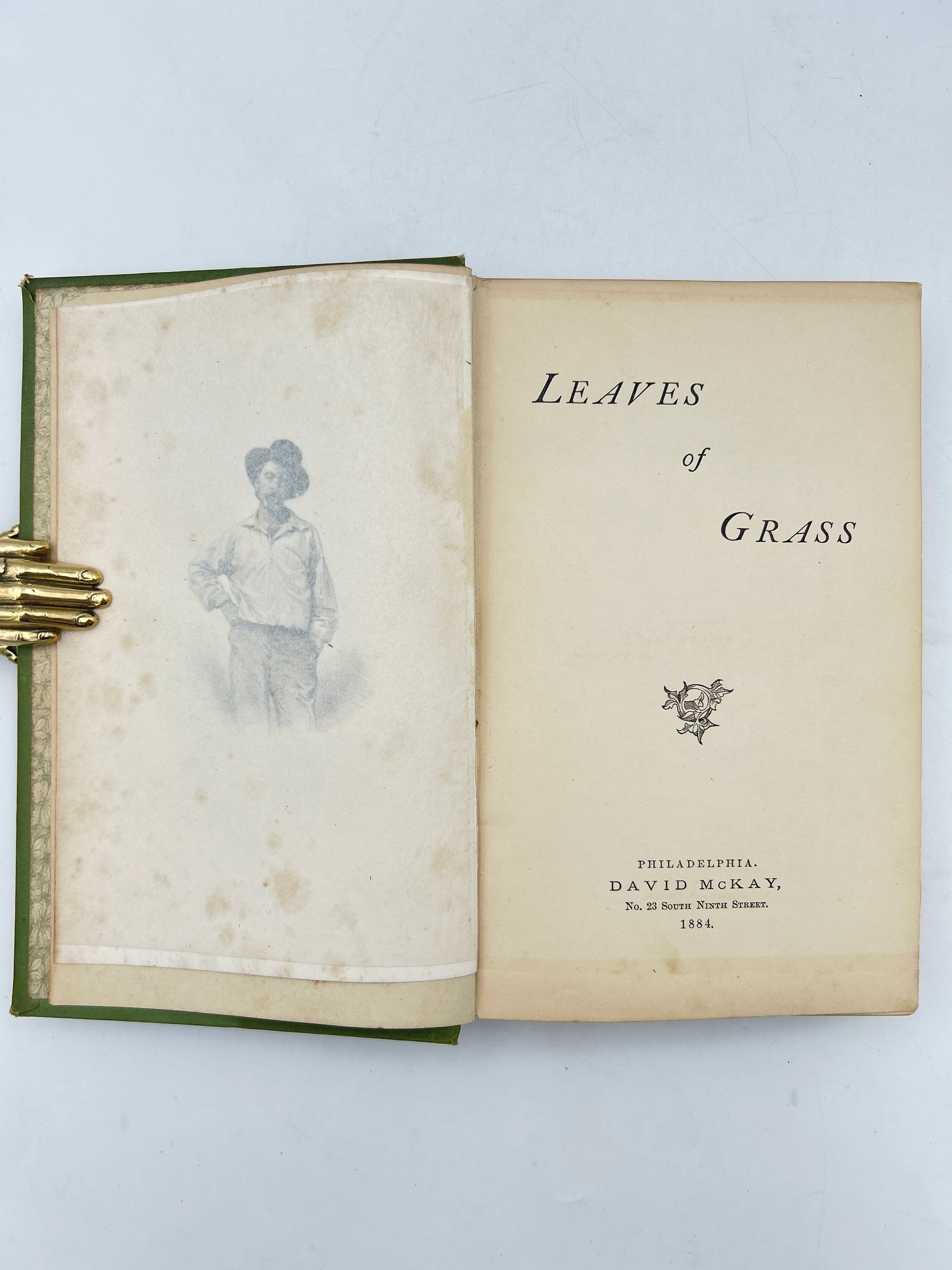
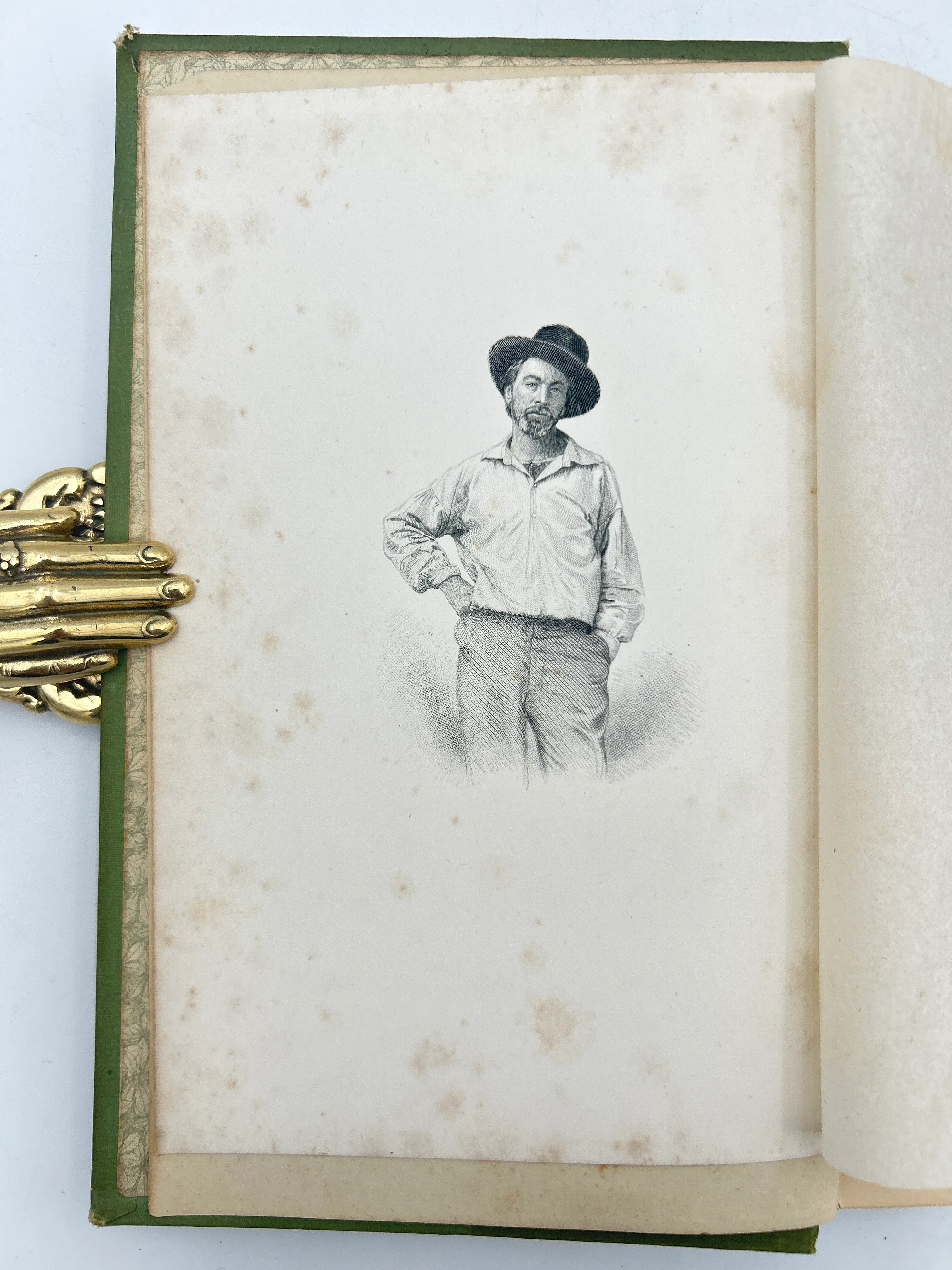
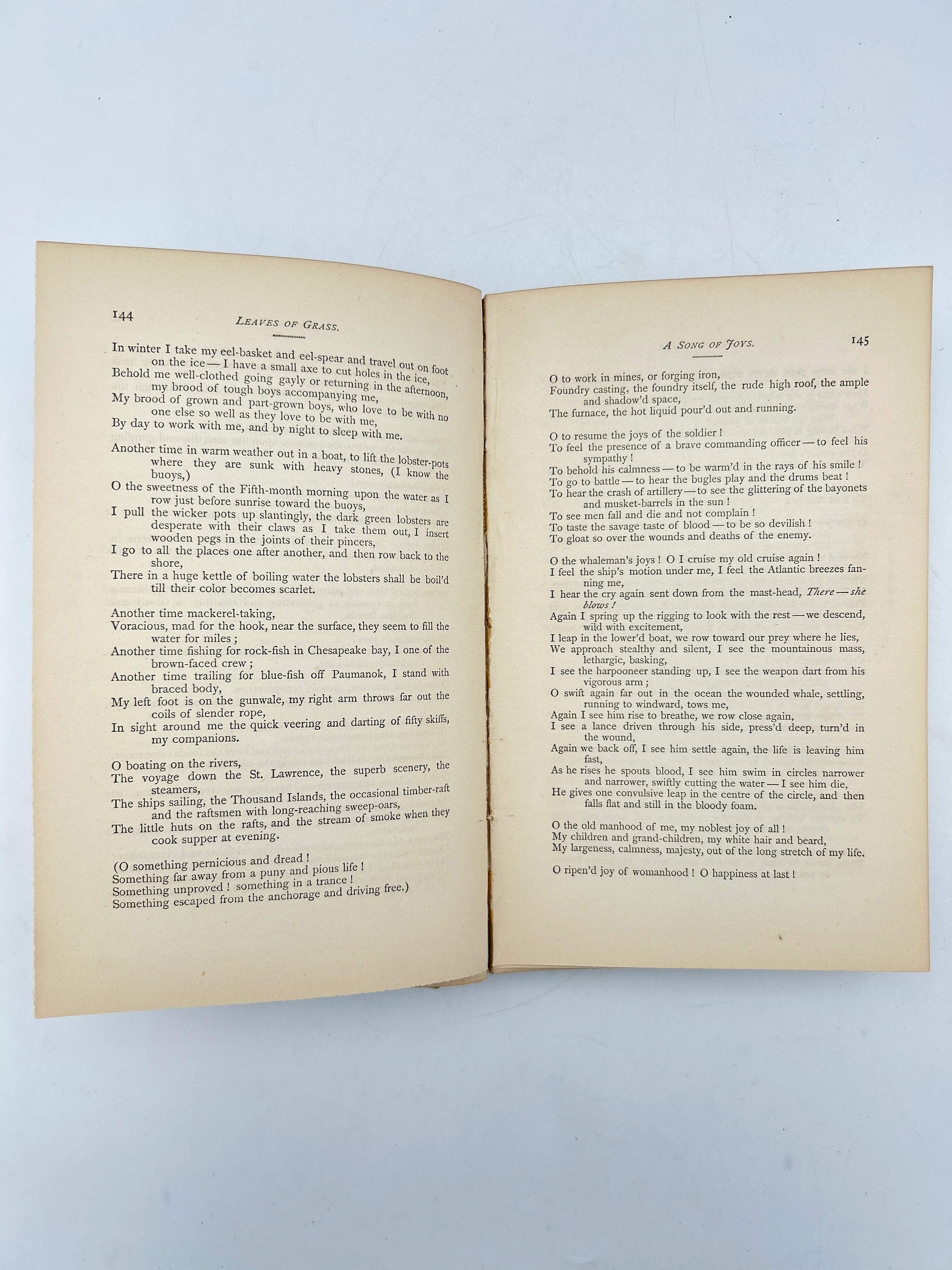
6b Walt Whitman. Philadelphia: David McKay, 1884. Scarce variant.
Notes
Leaves of Grass is the supreme, quintessential masterpiece of American poetry—a lifelong, ever-evolving literary project that captured the raw, untamed spirit of a rising democratic nation. Writing in revolutionary, rhythmically organic free verse that completely broke away from traditional European meter and rhyme, Walt Whitman cast himself as the rowdy, all-encompassing prophet of the common man. The collection is anchored by monumental pieces like "Song of Myself," alongside poignant Civil War elegies such as "When Lilacs Last in the Dooryard Bloom’d". Whitman's verse celebrates the profound sacredness of the human body, the interconnectedness of nature, and the vast, diverse landscape of American life. By boldly treating topics of sensuality, labor, and spirituality with equal reverence, the text stands as an ecstatic, radical celebration of individual identity, universal brotherhood, and the endless potential of a free society.
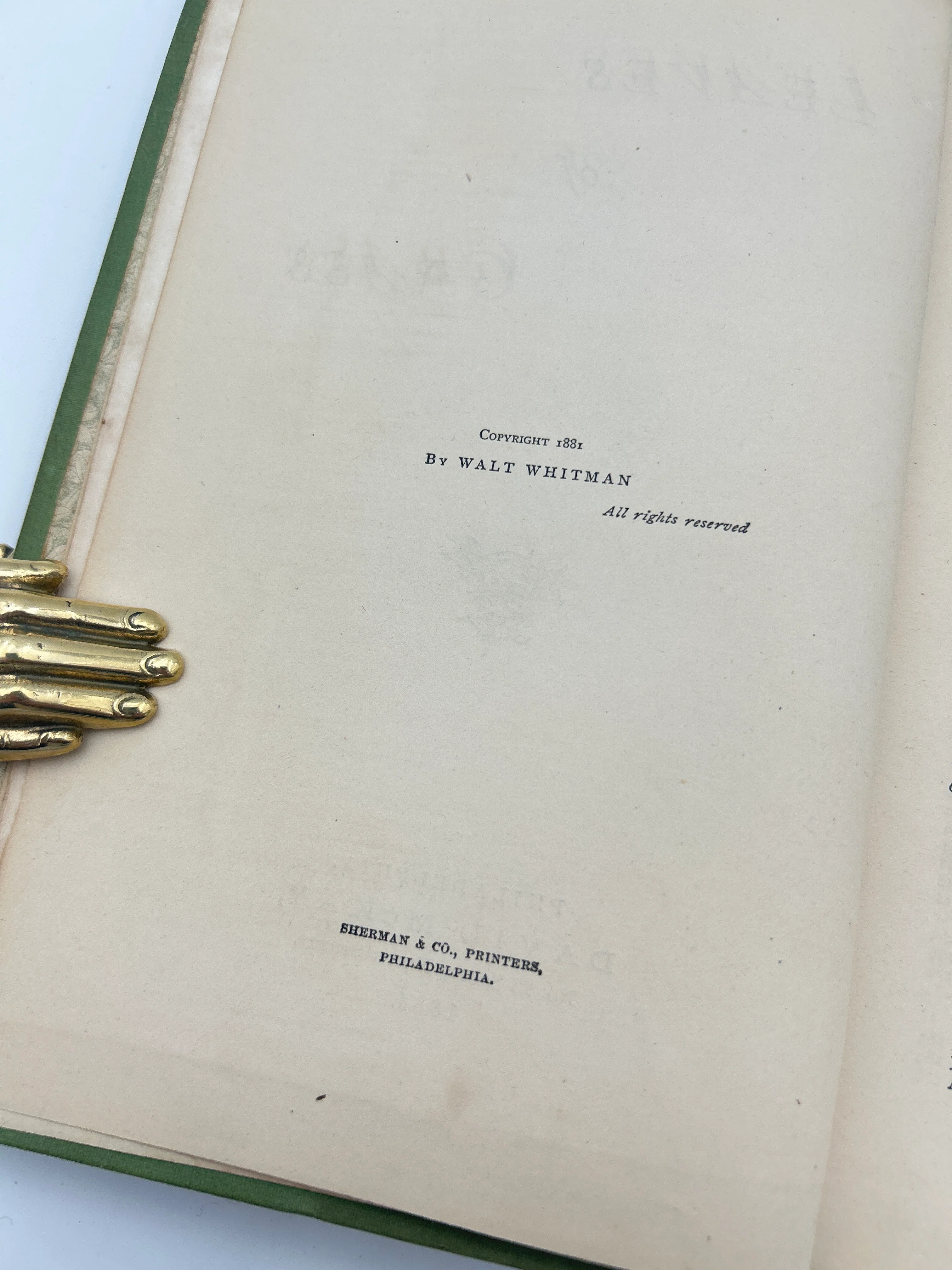
First published by the author himself as a slim, anonymous 12-poem pamphlet in Brooklyn in 1855, Leaves of Grass became Whitman's life's work, which he constantly revised, reordered, and expanded across multiple distinct editions until his death. This 1884 volume represents an incredibly dramatic chapter in American censorship and publishing history. In 1881, the mainstream Boston publisher James R. Osgood issued this exact 382-page arrangement. However, the Boston District Attorney threatened Osgood with criminal prosecution for "obscene literature" unless Whitman heavily expurgated his more sensual poems. Whitman proudly refused, prompting Osgood to abandon the book and hand over the electrotype printing plates to the author as a settlement. Whitman initially took the plates to Philadelphia publisher Rees Welsh, who briefly issued the book in 1882. Later that same year, an ambitious young publisher named David McKay took over Rees Welsh’s business and publishing assets. McKay proudly embraced Whitman, using those historic Boston plates to keep this definitive, un-censored arrangement continuously in print through the 1880s.
The 1884 printing marks the true stabilization of Whitman’s text and the dawn of his survival into the modern era. David McKay was not merely Whitman’s publisher; he became a close personal friend and a crucial defender of his artistic freedom during a period when the American establishment viewed the poet with intense hostility. By issuing this handsome, unexpurgated trade edition at a time when older copies were actively suppressed, McKay democratized Whitman’s work and safely preserved the poet's complete vision for future generations. Today, this 1884 artifact is highly prized by collectors. It captures Leaves of Grass at a crucial historical crossroads: the precise moment it transitioned from a scandalous, underground text into an undisputed, globally canonized masterpiece of American literature.
Description
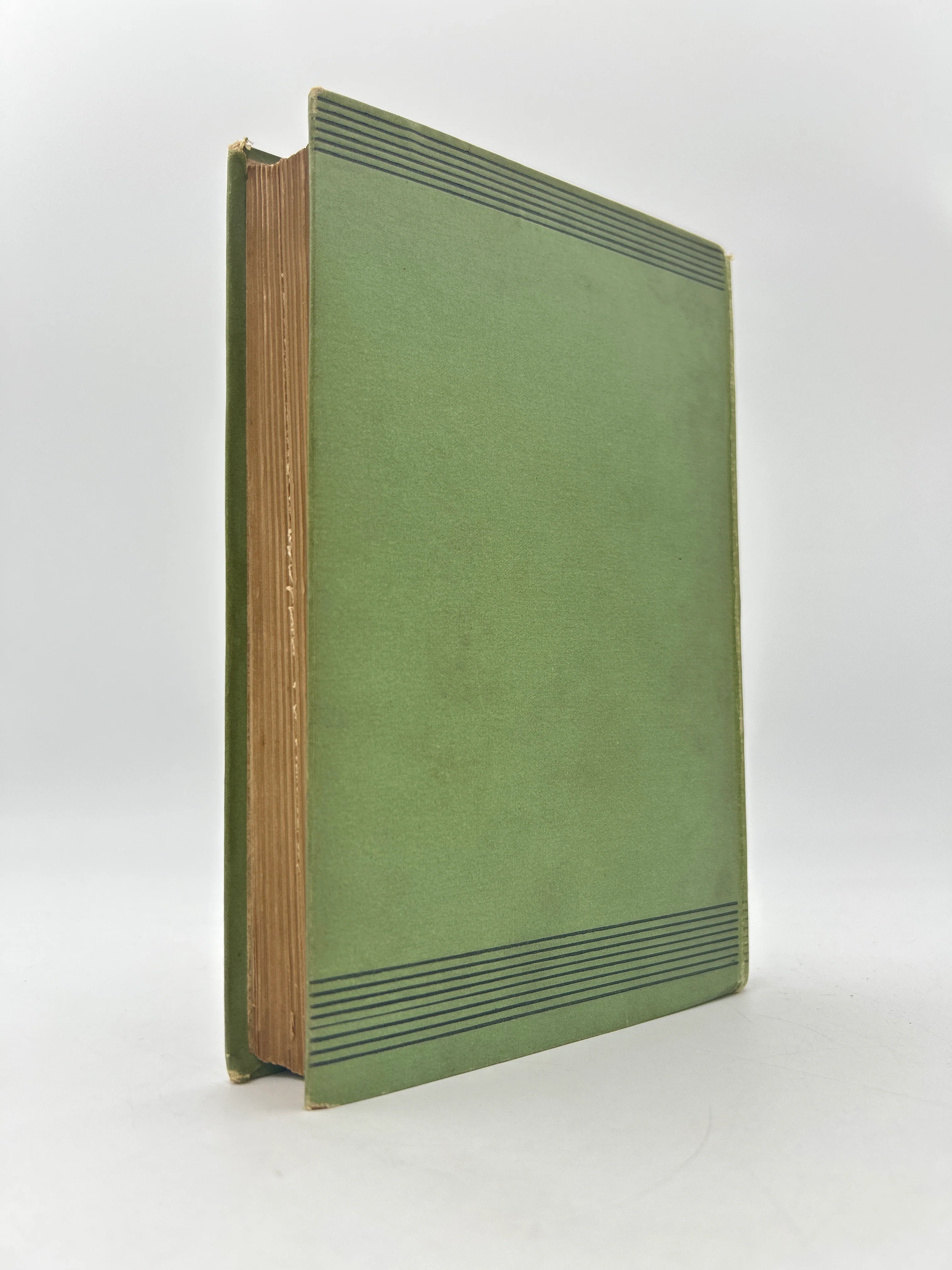
Green canvas binding with gilt lettering to cover and spine. Black lines to top and bottom of boards and spine. Slight cocking to spine. Gilt edges. Sunfading to spine and softening to head and foot of spine.
$313.25
Original: $895.00
-65%Leaves of Grass—
$895.00
$313.25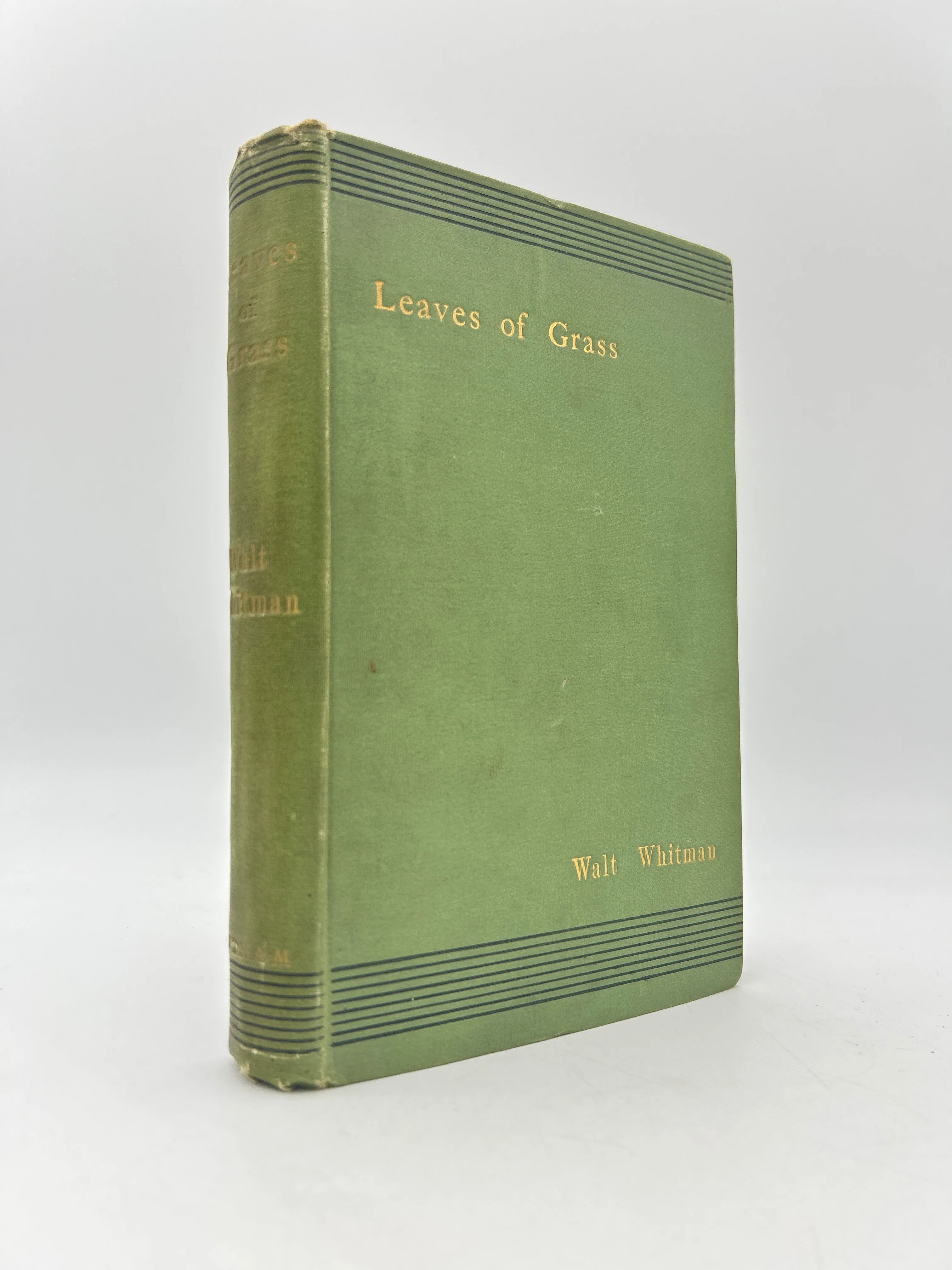
Description
6b Walt Whitman. Philadelphia: David McKay, 1884. Scarce variant.
Notes
Leaves of Grass is the supreme, quintessential masterpiece of American poetry—a lifelong, ever-evolving literary project that captured the raw, untamed spirit of a rising democratic nation. Writing in revolutionary, rhythmically organic free verse that completely broke away from traditional European meter and rhyme, Walt Whitman cast himself as the rowdy, all-encompassing prophet of the common man. The collection is anchored by monumental pieces like "Song of Myself," alongside poignant Civil War elegies such as "When Lilacs Last in the Dooryard Bloom’d". Whitman's verse celebrates the profound sacredness of the human body, the interconnectedness of nature, and the vast, diverse landscape of American life. By boldly treating topics of sensuality, labor, and spirituality with equal reverence, the text stands as an ecstatic, radical celebration of individual identity, universal brotherhood, and the endless potential of a free society.
First published by the author himself as a slim, anonymous 12-poem pamphlet in Brooklyn in 1855, Leaves of Grass became Whitman's life's work, which he constantly revised, reordered, and expanded across multiple distinct editions until his death. This 1884 volume represents an incredibly dramatic chapter in American censorship and publishing history. In 1881, the mainstream Boston publisher James R. Osgood issued this exact 382-page arrangement. However, the Boston District Attorney threatened Osgood with criminal prosecution for "obscene literature" unless Whitman heavily expurgated his more sensual poems. Whitman proudly refused, prompting Osgood to abandon the book and hand over the electrotype printing plates to the author as a settlement. Whitman initially took the plates to Philadelphia publisher Rees Welsh, who briefly issued the book in 1882. Later that same year, an ambitious young publisher named David McKay took over Rees Welsh’s business and publishing assets. McKay proudly embraced Whitman, using those historic Boston plates to keep this definitive, un-censored arrangement continuously in print through the 1880s.
The 1884 printing marks the true stabilization of Whitman’s text and the dawn of his survival into the modern era. David McKay was not merely Whitman’s publisher; he became a close personal friend and a crucial defender of his artistic freedom during a period when the American establishment viewed the poet with intense hostility. By issuing this handsome, unexpurgated trade edition at a time when older copies were actively suppressed, McKay democratized Whitman’s work and safely preserved the poet's complete vision for future generations. Today, this 1884 artifact is highly prized by collectors. It captures Leaves of Grass at a crucial historical crossroads: the precise moment it transitioned from a scandalous, underground text into an undisputed, globally canonized masterpiece of American literature.
Description
Green canvas binding with gilt lettering to cover and spine. Black lines to top and bottom of boards and spine. Slight cocking to spine. Gilt edges. Sunfading to spine and softening to head and foot of spine.