đźšš Free Worldwide Shipping on All Orders!Shop Now
HomeStore

Le Comte de Monte-Cristo

Le Comte de Monte-Cristo

6b Alexandre Dumas. Auguste Maquet. Paris: Chez Marescq et Cie, Éditeurs, 5 rue du Pont-de-Lodi, 1852. Early Parisian Illustrated Edition. Two Volumes. In French.

Notes
Set during the turbulent historical backdrop of the Bourbon Restoration and the Hundred Days of Napoleon's return, The Count of Monte Cristo is the ultimate literary epic of wrongful imprisonment, hidden treasure, and calculated vengeance. The narrative follows Edmond Dantès, a brilliant, noble-hearted young French sailor who is falsely accused of treason by jealous rivals on the eve of his wedding. Consigned to a lifetime of solitary despair in the grim island fortress of the Château d'If, Dantès meets the Abbé Faria, an aging, polymathic prisoner who becomes his mentor. Faria educates Dantès in sciences, languages, and culture, and reveals the secret location of a colossal treasure buried on the uninhabited Isle of Monte Cristo. Following a daring, miraculous escape after fourteen years of captivity, Dantès unearths the fortune and adopts the persona of the enigmatic, unfathomably wealthy Count of Monte Cristo. He systematically infiltrates the highest echelons of Parisian society to orchestrate the psychological and social destruction of the three men who betrayed him. Far more than a mere adventure yarn, the novel explores profound existential themes of divine justice, the corrupting nature of absolute power, and the ultimate path to emotional redemption.
Originally serialized to a completely obsessed French public across eighteen separate monthly installments in the Journal des Débats between August 1844 and January 1846, the novel was penned by Alexandre Dumas at the absolute zenith of his international fame. Like many of his sprawling historical epics, Dumas constructed the incredibly intricate plot alongside his chief literary collaborator and ghostwriter, Auguste Maquet.
The character of Dantès was famously inspired by a real-life true-crime case that Dumas unearthed in the French police archives—the tragic account of a wrongly accused French shoemaker named Pierre Picaud. Following the massive success of the initial multi-volume unillustrated printings, Parisian publishers scrambled to meet the public demand for visual editions. This 1852 edition by Chez Marescq stands as one of the earliest and most visually distinctive illustrated formats ever produced, hitting the market while the text was still a fresh, living cultural phenomenon. 
This 1852 artifact occupies a highly prized niche in the history of 19th-century French mass-market and popular publishing. The house of Chez Marescq & Cie was a pioneer of the early Victorian "popular illustrated" revolution in France, specializing in releasing major literary monuments in affordable, large-format double-column layouts. By commissioning elite Romantic illustrators like Jean-Adolphe Beaucé (the definitive visual interpreter of Dumas's heroes) and Pierre-Gustave Staal, Marescq effectively bridged the gap between elite private libraries and the rising, literate French middle class. Because these volumes were originally distributed in thin, fragile paper parts (fascicles) meant for instant consumption, they were overwhelmingly read to pieces, stained, or broken up across the decades. Finding the entire work completely preserved in a uniform, two-volume contemporary binding is an exceptional rarity in the antiquarian trade, standing as an exquisite monument to the golden age of French wood engraving.
Description

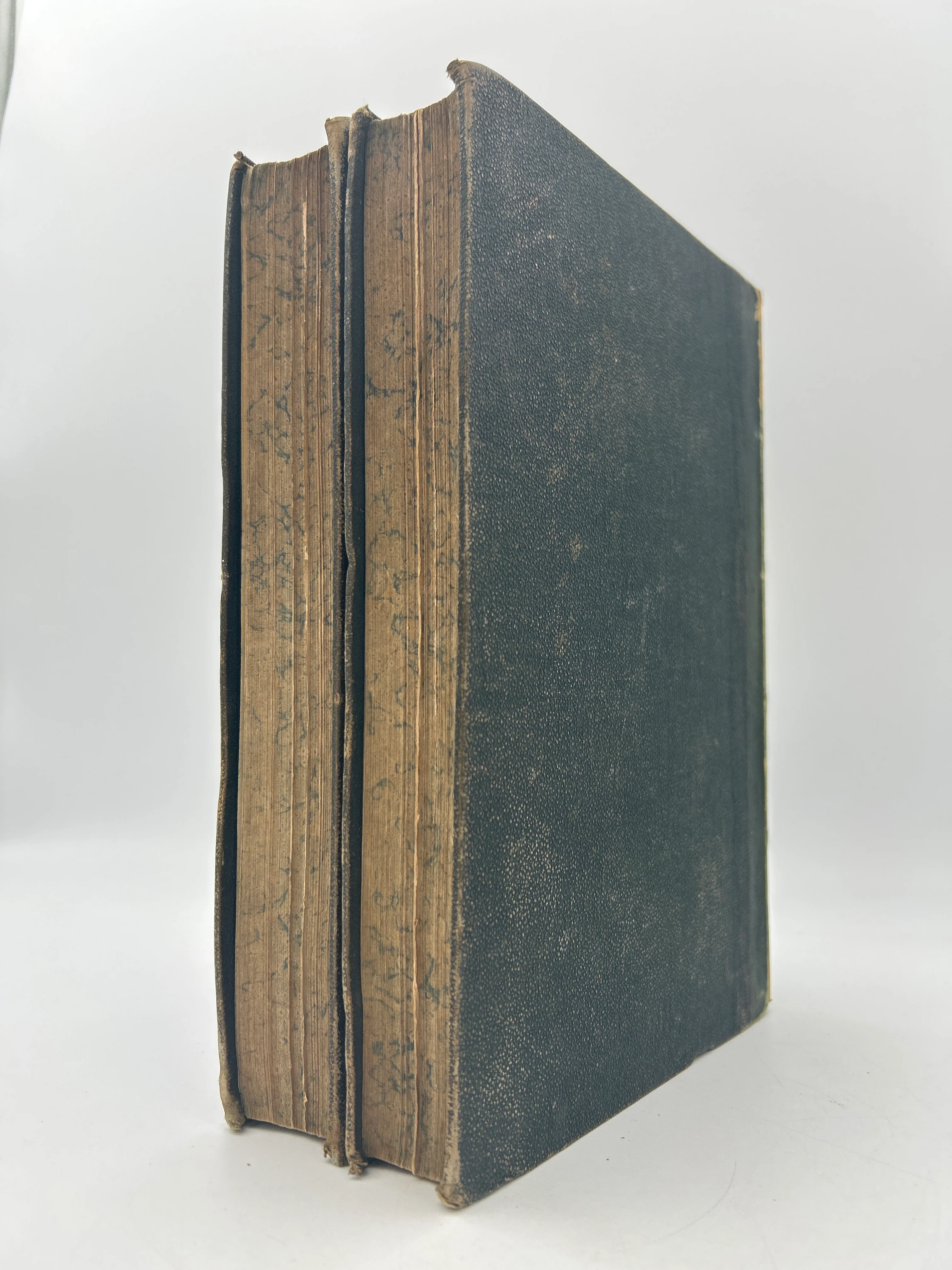
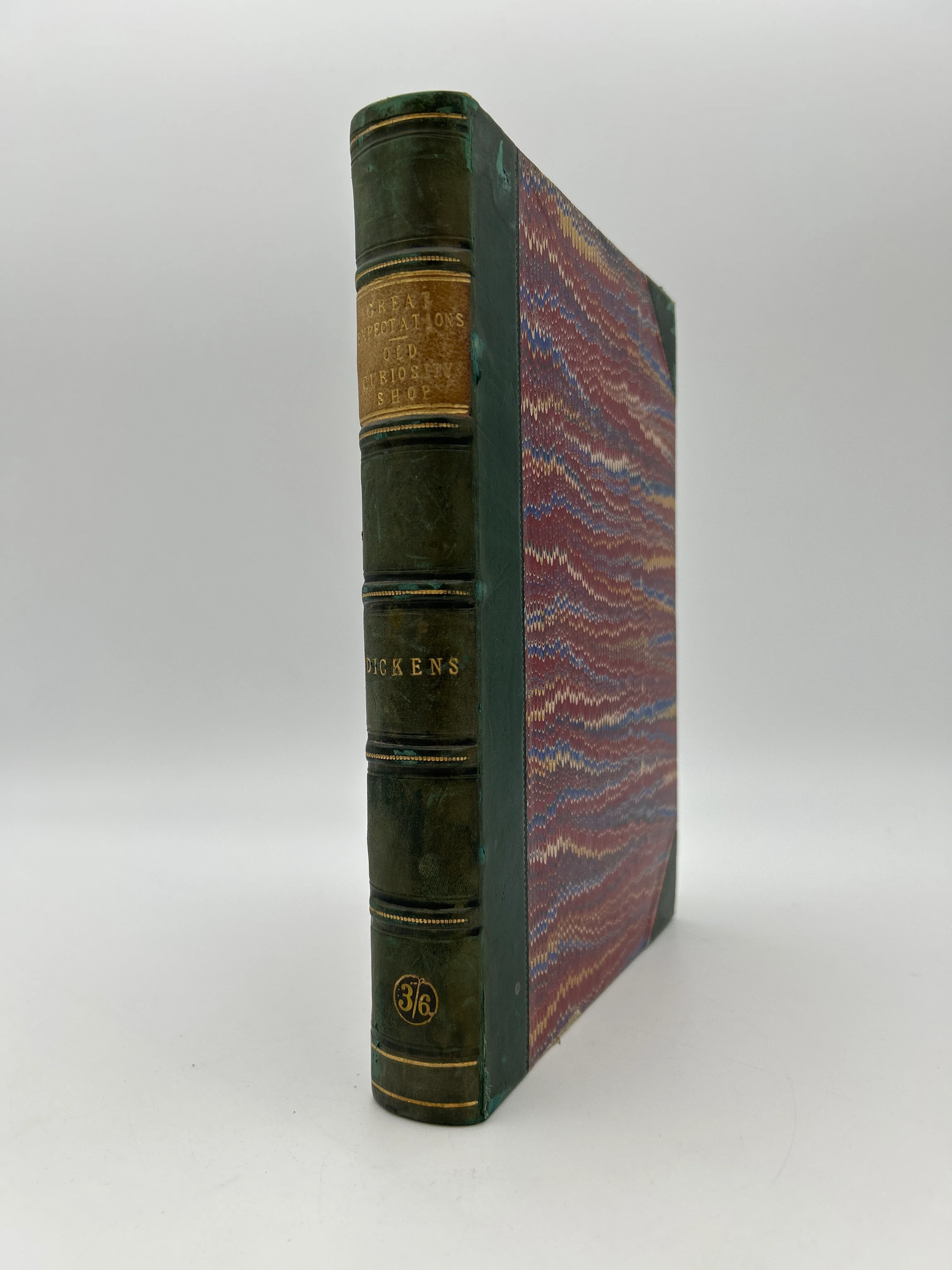
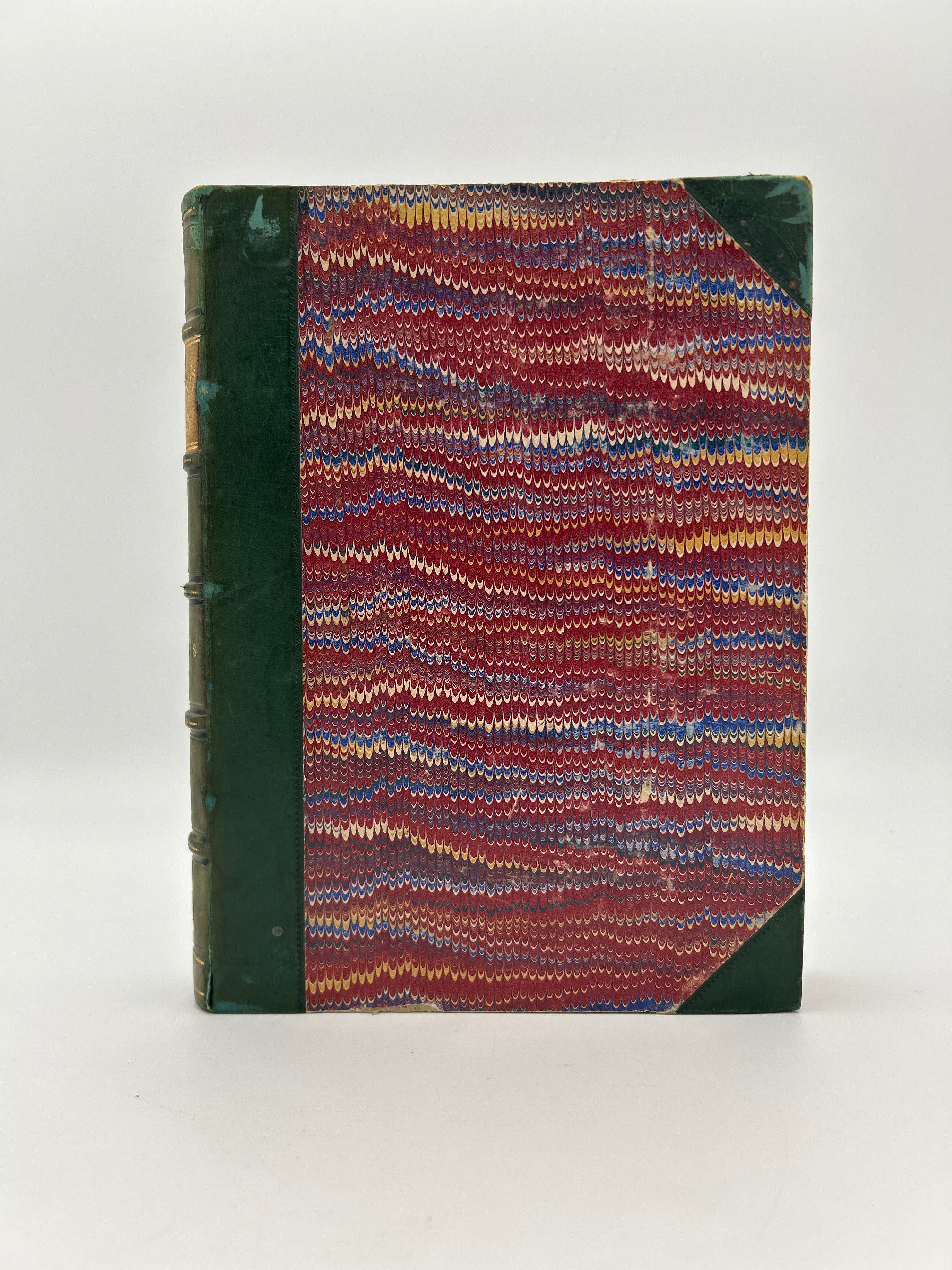
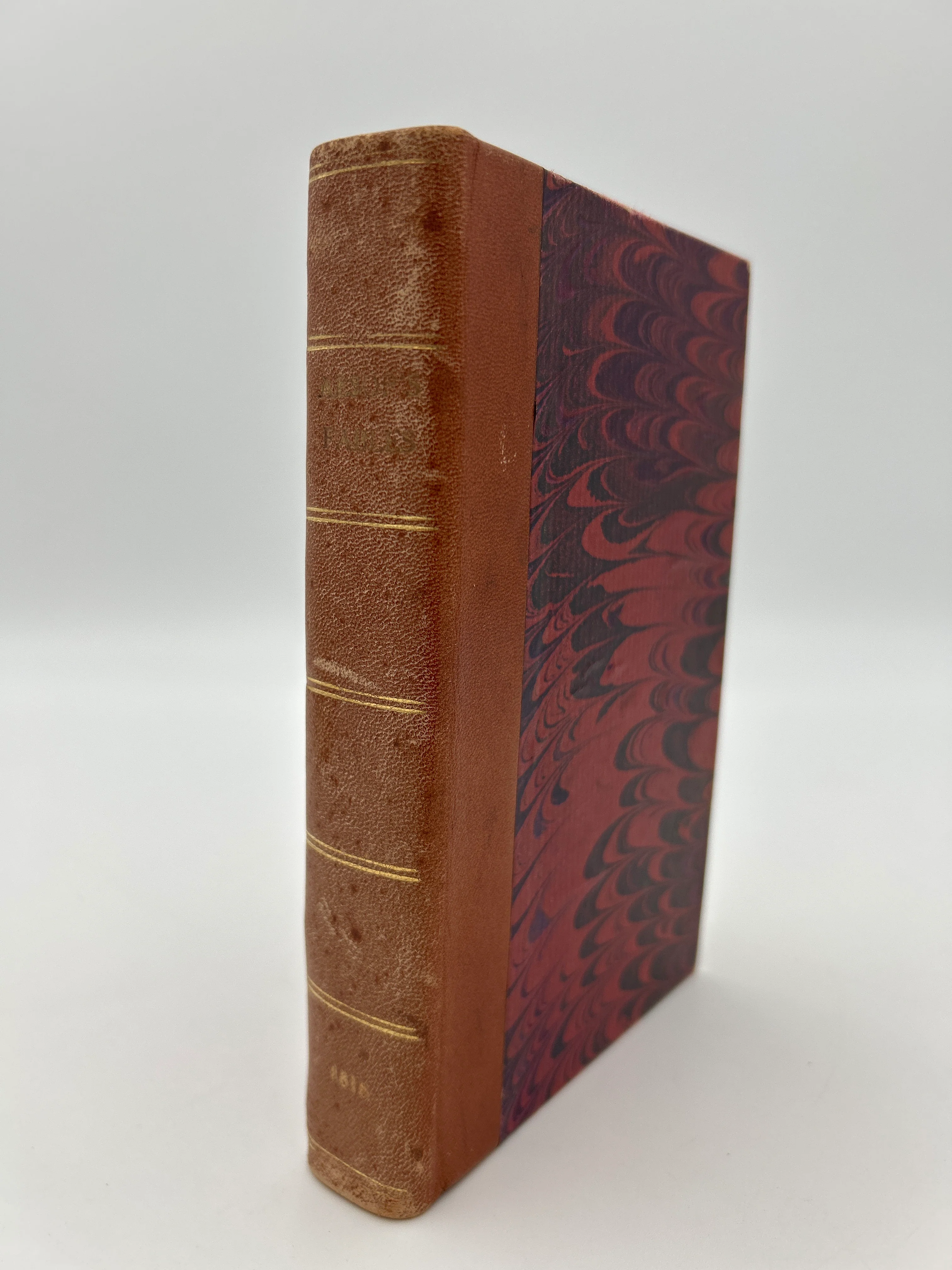
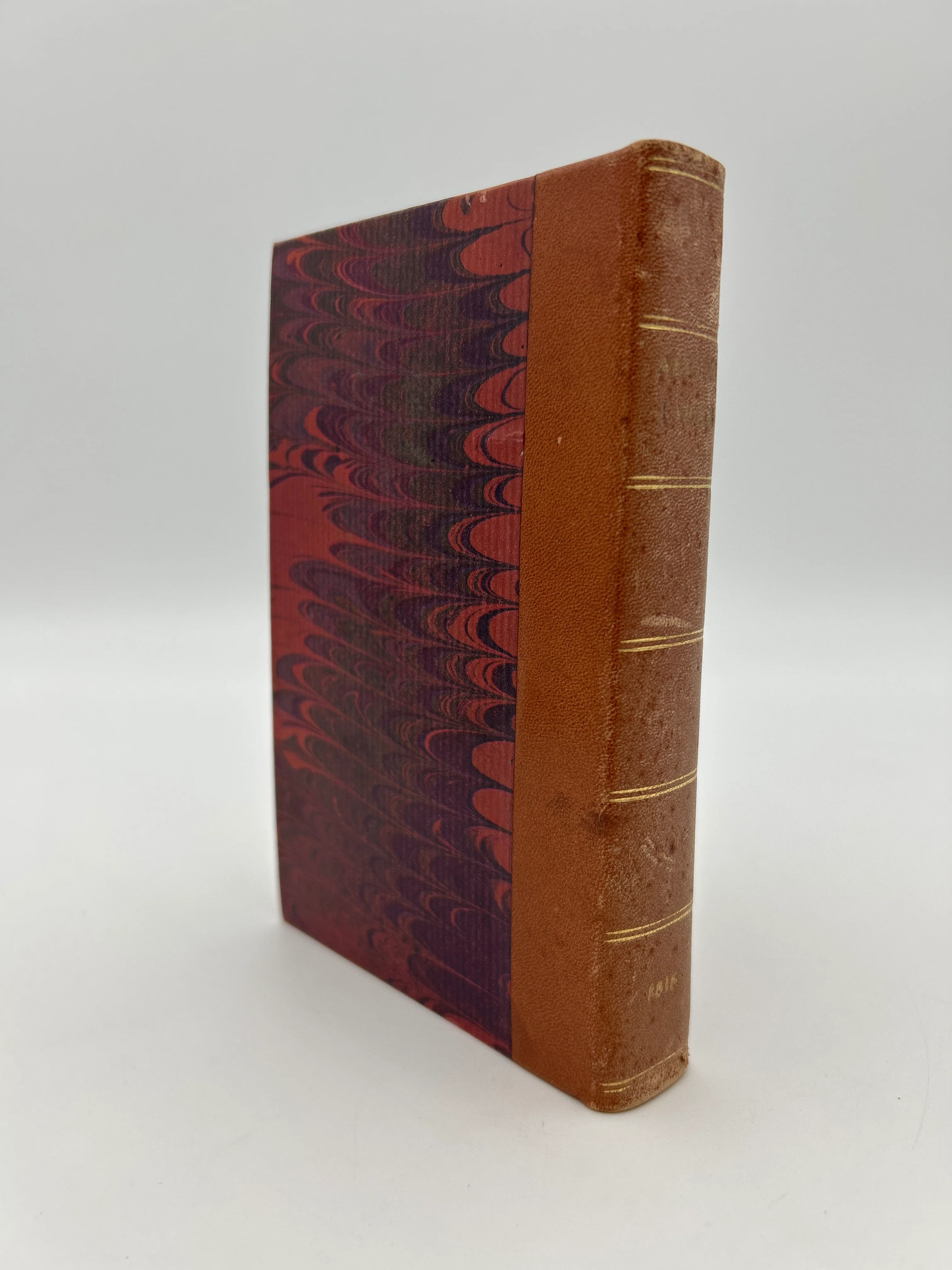
Printed in double-column format. Bound in contemporary mid-19th-century three-quarter leather over marbled paper boards, spines decorated and lettered in gilt. Lavishly illustrated with dozens of dramatic text woodcut vignettes and full-page engravings after prominent French artists of the Romantic era, including Jean-Adolphe Beaucé, Pierre-Gustave Staal, Eugène Lancelot, and Henri Coppin.

Bending to points. Rubbing and general wear to extremities. Fading and rubbing to hinge of leather on spines. Some frayign to head and foot and scuffs to each spine. Shadowed text in a few instances. Fully intact. French. Good codnition. 

$1,032.50

Original: $2,950.00

-65%
Le Comte de Monte-Cristo—

$2,950.00

$1,032.50
Product image 1
Product image 2
Product image 3
Product image 4
Product image 5
Product image 6
Product image 7
Product image 8
Product image 9
Product image 10
Product image 11

Description

6b Alexandre Dumas. Auguste Maquet. Paris: Chez Marescq et Cie, Éditeurs, 5 rue du Pont-de-Lodi, 1852. Early Parisian Illustrated Edition. Two Volumes. In French.

Notes
Set during the turbulent historical backdrop of the Bourbon Restoration and the Hundred Days of Napoleon's return, The Count of Monte Cristo is the ultimate literary epic of wrongful imprisonment, hidden treasure, and calculated vengeance. The narrative follows Edmond Dantès, a brilliant, noble-hearted young French sailor who is falsely accused of treason by jealous rivals on the eve of his wedding. Consigned to a lifetime of solitary despair in the grim island fortress of the Château d'If, Dantès meets the Abbé Faria, an aging, polymathic prisoner who becomes his mentor. Faria educates Dantès in sciences, languages, and culture, and reveals the secret location of a colossal treasure buried on the uninhabited Isle of Monte Cristo. Following a daring, miraculous escape after fourteen years of captivity, Dantès unearths the fortune and adopts the persona of the enigmatic, unfathomably wealthy Count of Monte Cristo. He systematically infiltrates the highest echelons of Parisian society to orchestrate the psychological and social destruction of the three men who betrayed him. Far more than a mere adventure yarn, the novel explores profound existential themes of divine justice, the corrupting nature of absolute power, and the ultimate path to emotional redemption.
Originally serialized to a completely obsessed French public across eighteen separate monthly installments in the Journal des Débats between August 1844 and January 1846, the novel was penned by Alexandre Dumas at the absolute zenith of his international fame. Like many of his sprawling historical epics, Dumas constructed the incredibly intricate plot alongside his chief literary collaborator and ghostwriter, Auguste Maquet.
The character of Dantès was famously inspired by a real-life true-crime case that Dumas unearthed in the French police archives—the tragic account of a wrongly accused French shoemaker named Pierre Picaud. Following the massive success of the initial multi-volume unillustrated printings, Parisian publishers scrambled to meet the public demand for visual editions. This 1852 edition by Chez Marescq stands as one of the earliest and most visually distinctive illustrated formats ever produced, hitting the market while the text was still a fresh, living cultural phenomenon. 
This 1852 artifact occupies a highly prized niche in the history of 19th-century French mass-market and popular publishing. The house of Chez Marescq & Cie was a pioneer of the early Victorian "popular illustrated" revolution in France, specializing in releasing major literary monuments in affordable, large-format double-column layouts. By commissioning elite Romantic illustrators like Jean-Adolphe Beaucé (the definitive visual interpreter of Dumas's heroes) and Pierre-Gustave Staal, Marescq effectively bridged the gap between elite private libraries and the rising, literate French middle class. Because these volumes were originally distributed in thin, fragile paper parts (fascicles) meant for instant consumption, they were overwhelmingly read to pieces, stained, or broken up across the decades. Finding the entire work completely preserved in a uniform, two-volume contemporary binding is an exceptional rarity in the antiquarian trade, standing as an exquisite monument to the golden age of French wood engraving.
Description

Printed in double-column format. Bound in contemporary mid-19th-century three-quarter leather over marbled paper boards, spines decorated and lettered in gilt. Lavishly illustrated with dozens of dramatic text woodcut vignettes and full-page engravings after prominent French artists of the Romantic era, including Jean-Adolphe Beaucé, Pierre-Gustave Staal, Eugène Lancelot, and Henri Coppin.

Bending to points. Rubbing and general wear to extremities. Fading and rubbing to hinge of leather on spines. Some frayign to head and foot and scuffs to each spine. Shadowed text in a few instances. Fully intact. French. Good codnition. 

Le Comte de Monte-Cristo | Moons Rare Books