🚚 Free Worldwide Shipping on All Orders!Shop Now

Frankenstein
6b Mary Shelley. The Lotus Library Edition. New York: Brentanos, 1923. Scarce.
Notes
Frankenstein stands as a monumental masterpiece of psychological terror, widely recognized as the foundational text of modern science fiction. The narrative unfolds through a nested epistolary structure, chronicling the tragic hubris of Victor Frankenstein, a brilliant but obsessive Swiss scientist. Driven by a desire to conquer death, Victor pieces together a humanoid creature from scavenged body parts and infuses it with the "spark of being." Horrified by the grotesque reality of his creation, Victor abandons the newborn being. Spurned by humanity and deeply traumatized by universal rejection, the highly intelligent Monster descends into a vengeful campaign of psychological torment against his creator. The novel masterfully explores themes of alienation, the ethical boundaries of scientific inquiry, and the monstrous consequences of parental and societal abandonment. Rather than a simple horror story, it is a profound philosophical meditation on the definition of humanity.
Written by Mary Wollstonecraft Shelley when she was just nineteen years old, the novel famously originated during the stormy summer of 1816 at Lake Geneva, where she, Percy Bysshe Shelley, and Lord Byron challenged one another to write ghost stories. First published anonymously in London in 1818 to mixed and bewildered reviews, the text was thoroughly revised by Shelley for her definitive 1831 edition, which cemented its dark, fatalistic atmosphere. In the text, Shelley seamlessly synthesizes the emotional intensity of Romantic poetry with the atmospheric dread of the Gothic novel, while injecting cutting-edge contemporary science—such as Luigi Galvani’s experiments with bio-electric "galvanism." Her subtitle, The Modern Prometheus, serves as a direct warning against the hubris of playing God, reflecting the turbulent industrial and scientific revolutions reshaping her world.
This scarce volume was issued as part of The Lotus Library, a highly collectible, elegant series of uniform pocket classics managed by the legendary New York publisher and bookseller Brentano’s. Originally introduced in the UK by Greening & Co. to showcase foreign literature and continental translations, Brentano's adapted the series for American readers between 1915 and 1930. The inclusion of Frankenstein—a British Gothic classic—alongside continental masters like Émile Zola and Leo Tolstoy highlighted the book's elevated status as a piece of world literature. Released on the cusp of the 1931 Universal Pictures film adaptation that forever altered the Monster's visual iconography, this edition captures Frankenstein precisely as it was experienced by readers of the "Lost Generation." It remains a crucial artifact from a period when the text was transitioning from a Victorian gothic curiosity into an undisputed titan of global literary modernism.
Description
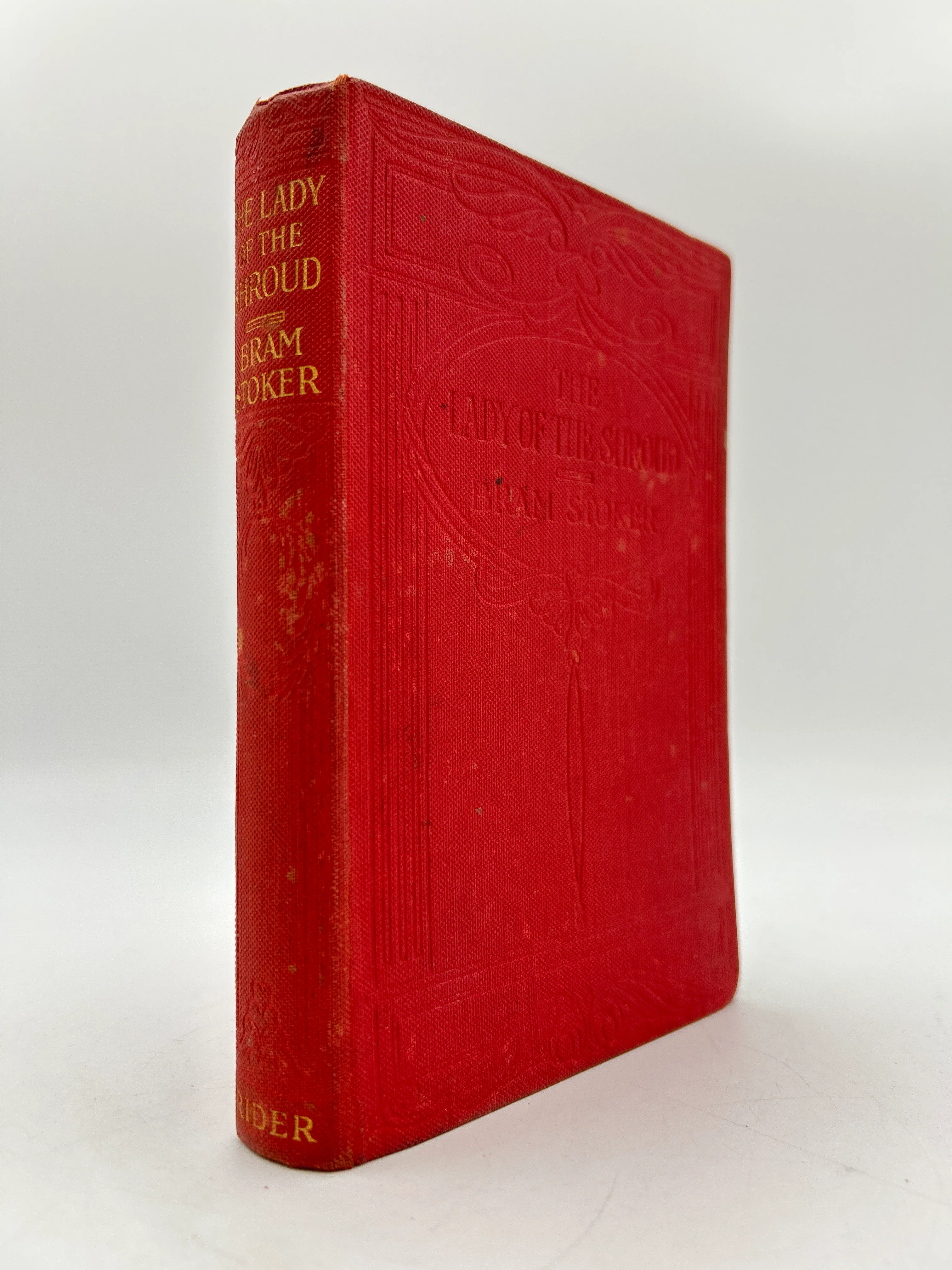
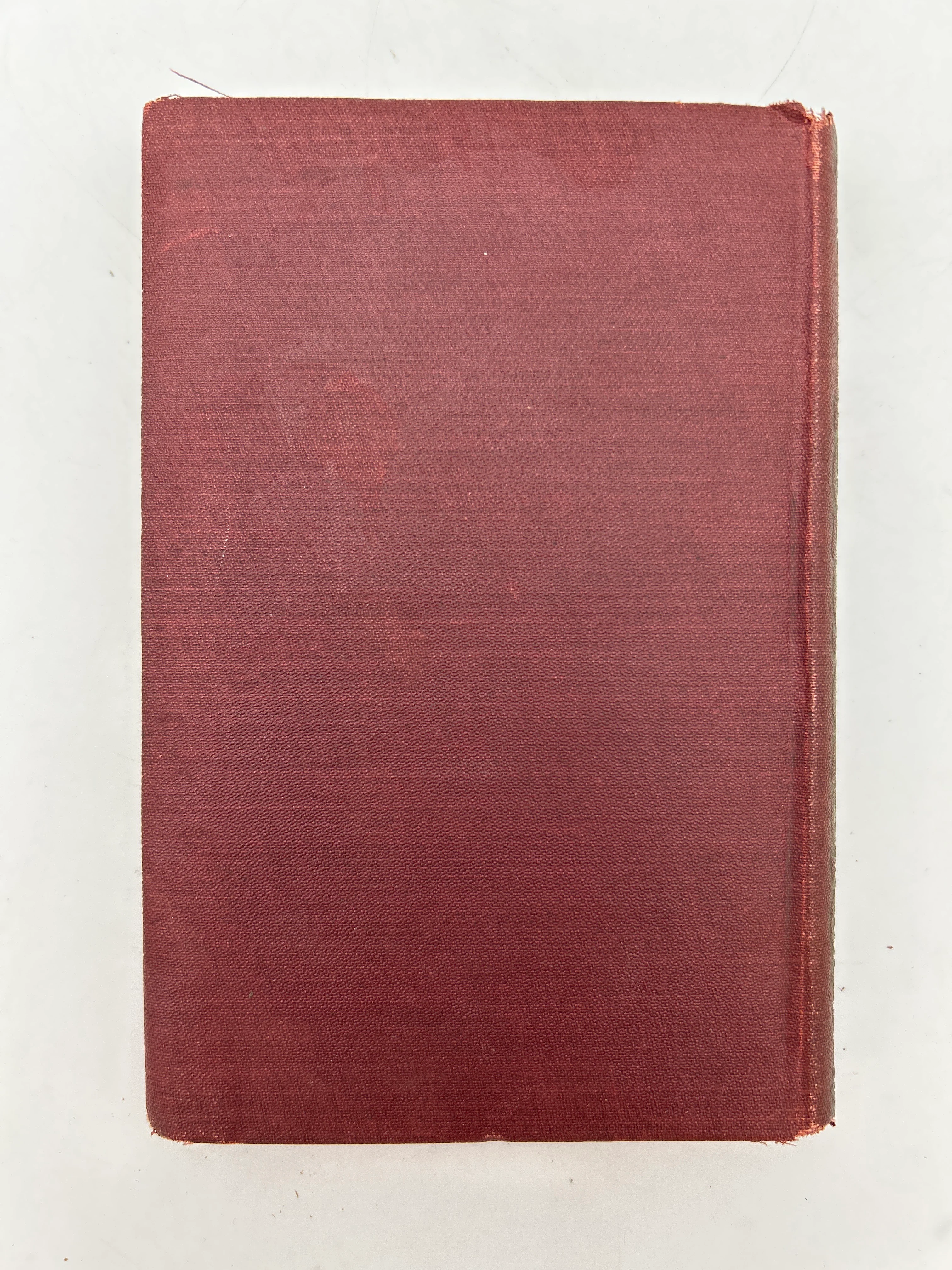
Bound in publisher's signature flexible ribbed red cloth. Blind-stamped art-deco organic floral motifs on the boards. Spine stamped in faded gilt. Gentle bumping to corners. Some shelf-wear and sun fading to spine. Absent dust jacket. Very good condition.
$313.25
Original: $895.00
-65%Frankenstein—
$895.00
$313.25


Description
6b Mary Shelley. The Lotus Library Edition. New York: Brentanos, 1923. Scarce.
Notes
Frankenstein stands as a monumental masterpiece of psychological terror, widely recognized as the foundational text of modern science fiction. The narrative unfolds through a nested epistolary structure, chronicling the tragic hubris of Victor Frankenstein, a brilliant but obsessive Swiss scientist. Driven by a desire to conquer death, Victor pieces together a humanoid creature from scavenged body parts and infuses it with the "spark of being." Horrified by the grotesque reality of his creation, Victor abandons the newborn being. Spurned by humanity and deeply traumatized by universal rejection, the highly intelligent Monster descends into a vengeful campaign of psychological torment against his creator. The novel masterfully explores themes of alienation, the ethical boundaries of scientific inquiry, and the monstrous consequences of parental and societal abandonment. Rather than a simple horror story, it is a profound philosophical meditation on the definition of humanity.
Written by Mary Wollstonecraft Shelley when she was just nineteen years old, the novel famously originated during the stormy summer of 1816 at Lake Geneva, where she, Percy Bysshe Shelley, and Lord Byron challenged one another to write ghost stories. First published anonymously in London in 1818 to mixed and bewildered reviews, the text was thoroughly revised by Shelley for her definitive 1831 edition, which cemented its dark, fatalistic atmosphere. In the text, Shelley seamlessly synthesizes the emotional intensity of Romantic poetry with the atmospheric dread of the Gothic novel, while injecting cutting-edge contemporary science—such as Luigi Galvani’s experiments with bio-electric "galvanism." Her subtitle, The Modern Prometheus, serves as a direct warning against the hubris of playing God, reflecting the turbulent industrial and scientific revolutions reshaping her world.
This scarce volume was issued as part of The Lotus Library, a highly collectible, elegant series of uniform pocket classics managed by the legendary New York publisher and bookseller Brentano’s. Originally introduced in the UK by Greening & Co. to showcase foreign literature and continental translations, Brentano's adapted the series for American readers between 1915 and 1930. The inclusion of Frankenstein—a British Gothic classic—alongside continental masters like Émile Zola and Leo Tolstoy highlighted the book's elevated status as a piece of world literature. Released on the cusp of the 1931 Universal Pictures film adaptation that forever altered the Monster's visual iconography, this edition captures Frankenstein precisely as it was experienced by readers of the "Lost Generation." It remains a crucial artifact from a period when the text was transitioning from a Victorian gothic curiosity into an undisputed titan of global literary modernism.
Description
Bound in publisher's signature flexible ribbed red cloth. Blind-stamped art-deco organic floral motifs on the boards. Spine stamped in faded gilt. Gentle bumping to corners. Some shelf-wear and sun fading to spine. Absent dust jacket. Very good condition.