🚚 Free Worldwide Shipping on All Orders!Shop Now

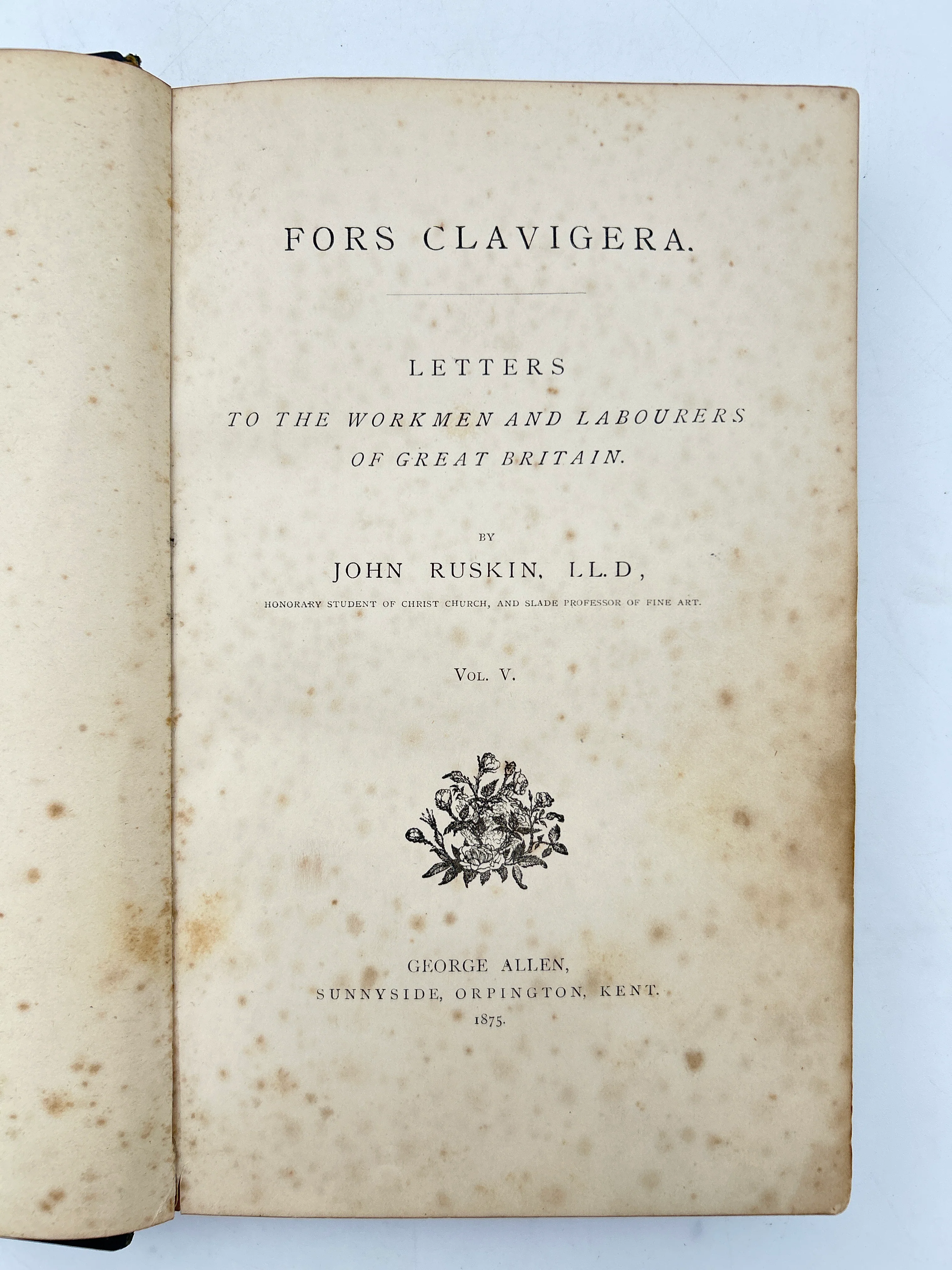
Fors Clavigera with Handwritten Ruskin Letter
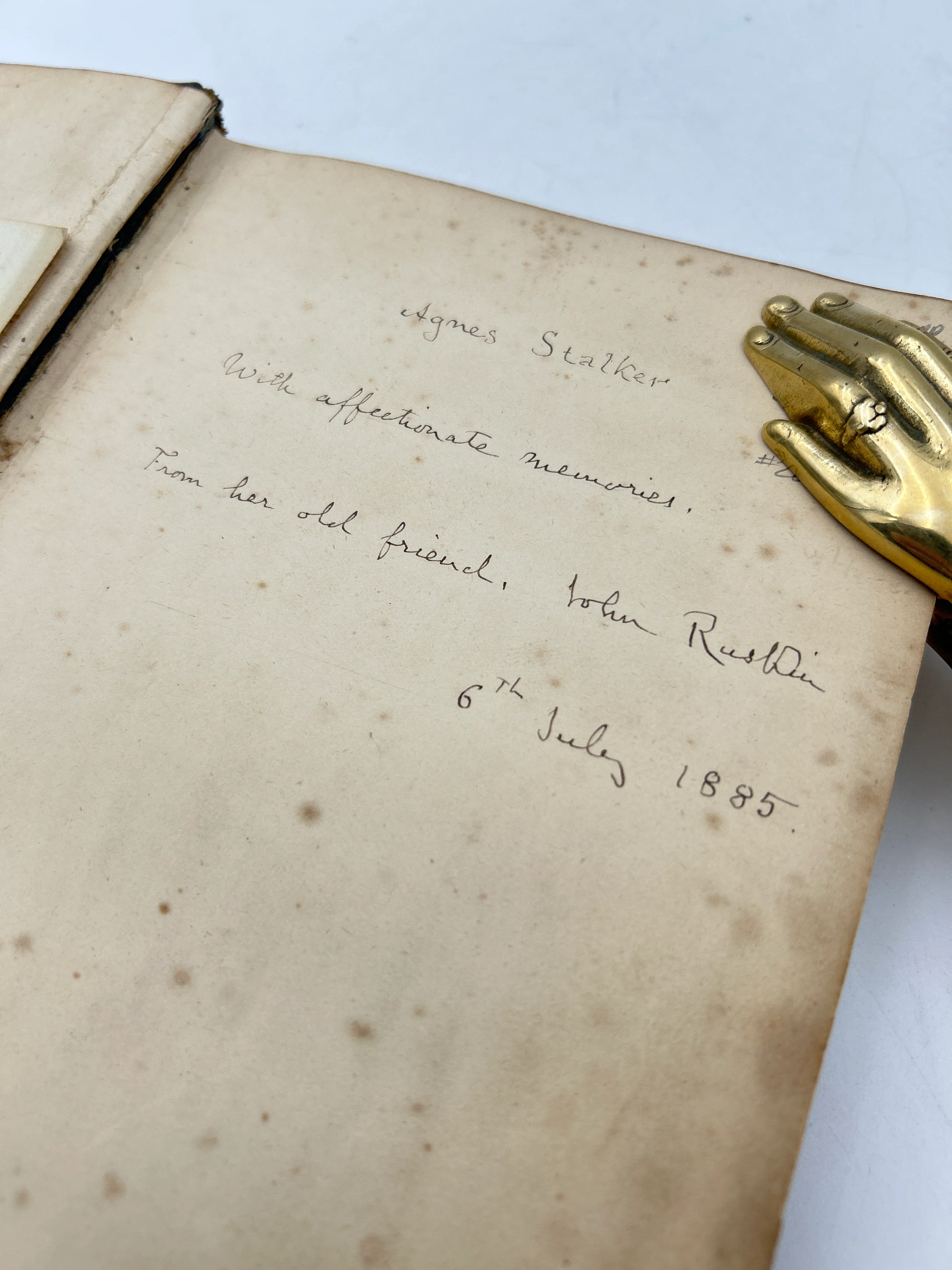
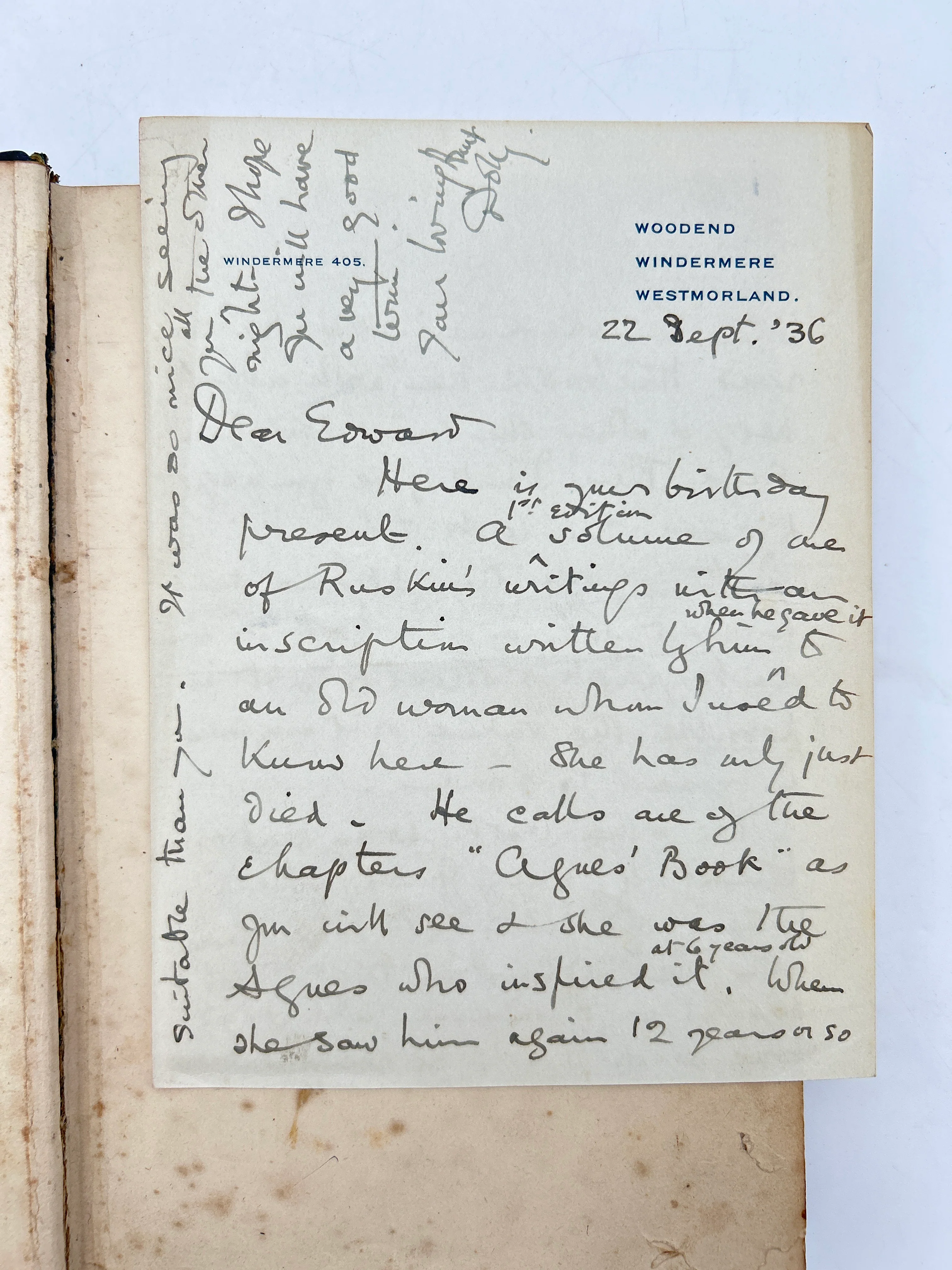
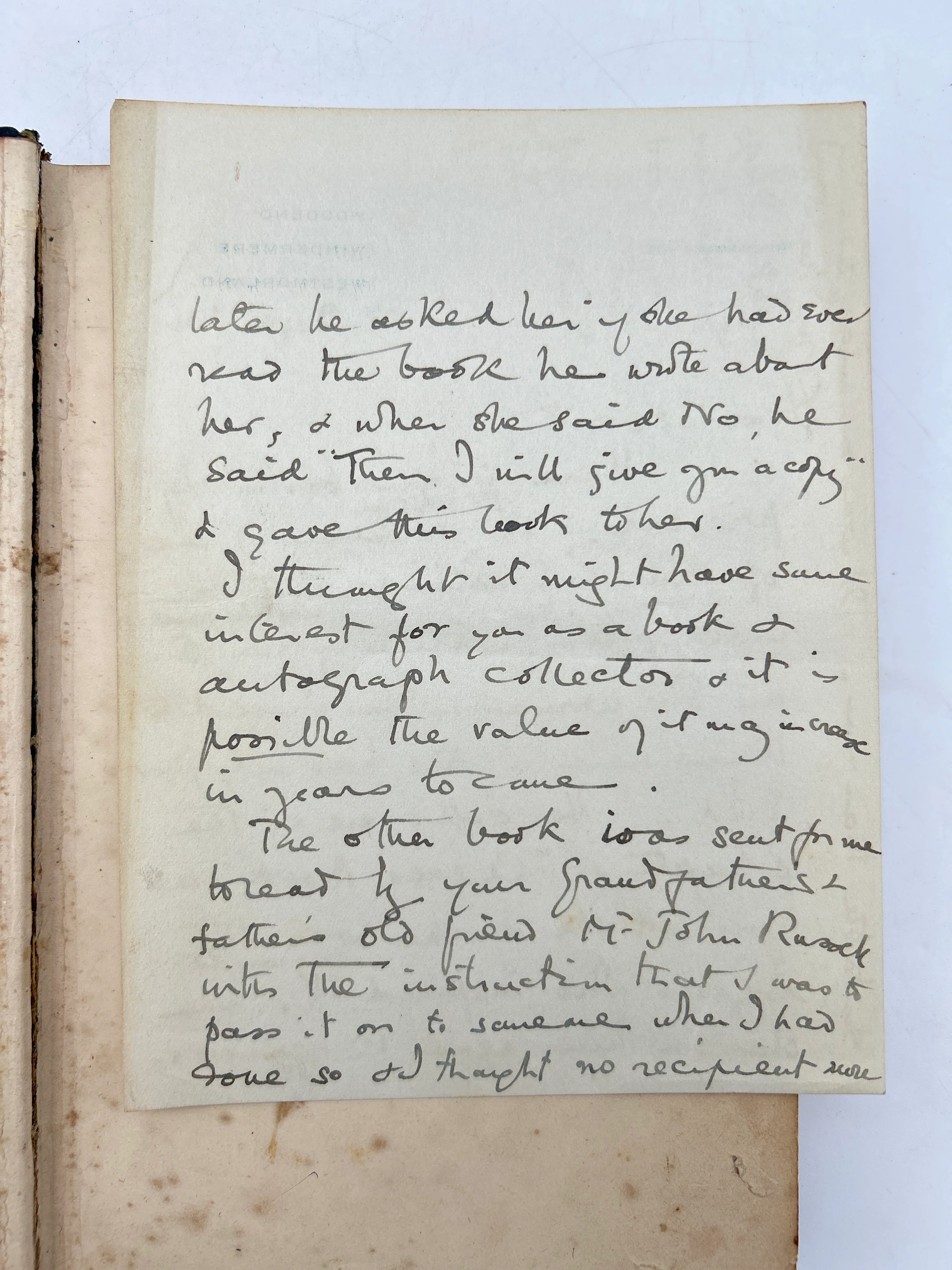
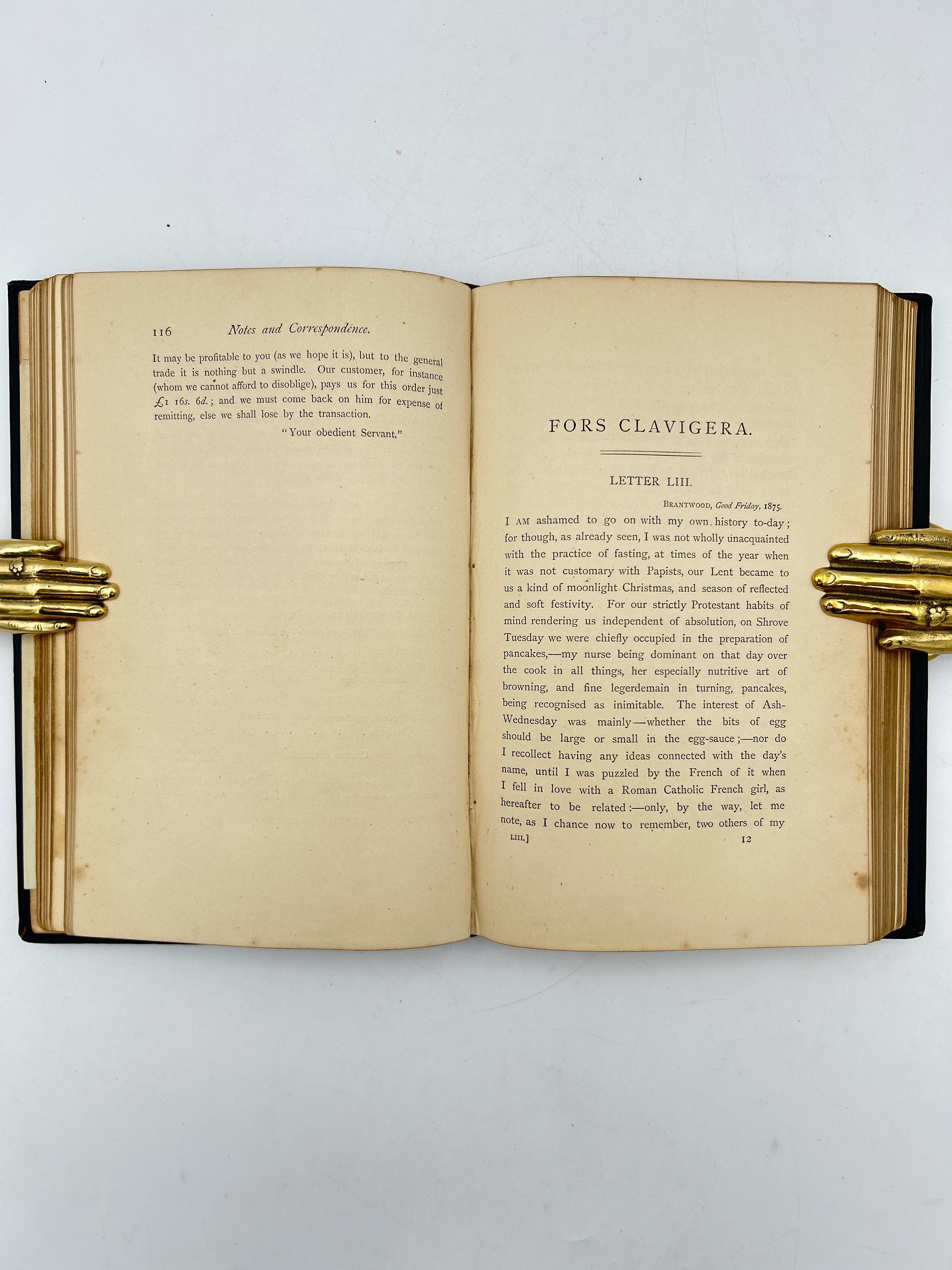
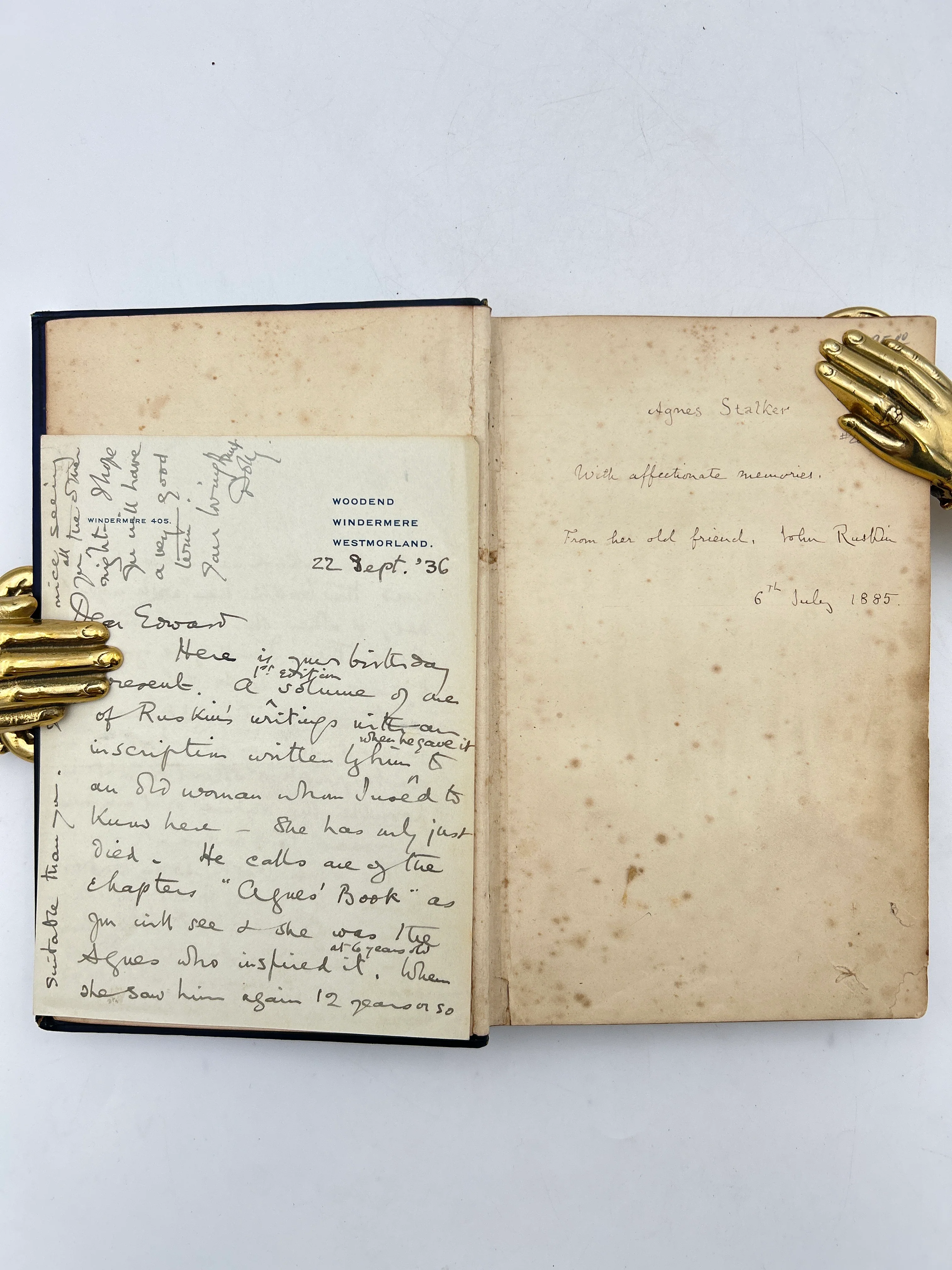
6b John Ruskin. George Allen, Sunnyside, Orpington, Kent, 1875. Volume Five only. Presentation copy to Agnes Stalker from Ruskin. Letter loosely inserted noting this book as a gift to a friend.
Notes
Fors Clavigera is John Ruskin’s sprawling, deeply personal, and highly radical series of monthly open letters addressed to the working-class citizens of Great Britain. Rather than a cohesive political treatise, the work functions as a brilliant, stream-of-consciousness critique of modern industrial capitalism, which Ruskin vehemently believed was destroying the human soul, eroding honest craftsmanship, and poisoning the natural environment. Volume V covers the year 1875 and is highly notable for its deeply pastoral and introspective turn. Within these letters, Ruskin masterfully blends heavy-hitting economic philosophy and critiques of usury with intimate observations on botany, medieval history, and local folklore. It is a foundational text outlining his utopian social experiment, the Guild of St. George, a project aimed at buying agricultural land to allow laborers to escape polluted factory cities and return to a life of rewarding, manual cultivation.
The inclusion of Agnes Stalker as the recipient of this presentation copy elevates this specific book into the upper tier of Ruskiniana. In 1874 and 1875, while living at his beloved lakeside estate, Brantwood, Ruskin formed a close, grandfatherly friendship with Agnes, a local child who lived on the surrounding Coniston moors. Fascinated by her sharp, uncorrupted curiosity about nature, Ruskin engaged in lengthy, playful debates with her regarding the behavior of the local insect population. In a famous sequence within Letters 50 and 51 (contained in this exact volume), Ruskin explicitly introduces "little Agnes" to his nationwide readership, using her intense interest in why bumblebees visited certain flowers over others to attack the rigid, unfeeling nature of modern academic education. The accompanying handwritten letter by Ruskin likely captures this warm, collaborative dynamic, cementing the book as a physical token of a real-life friendship that directly shaped Victorian literature.
Description
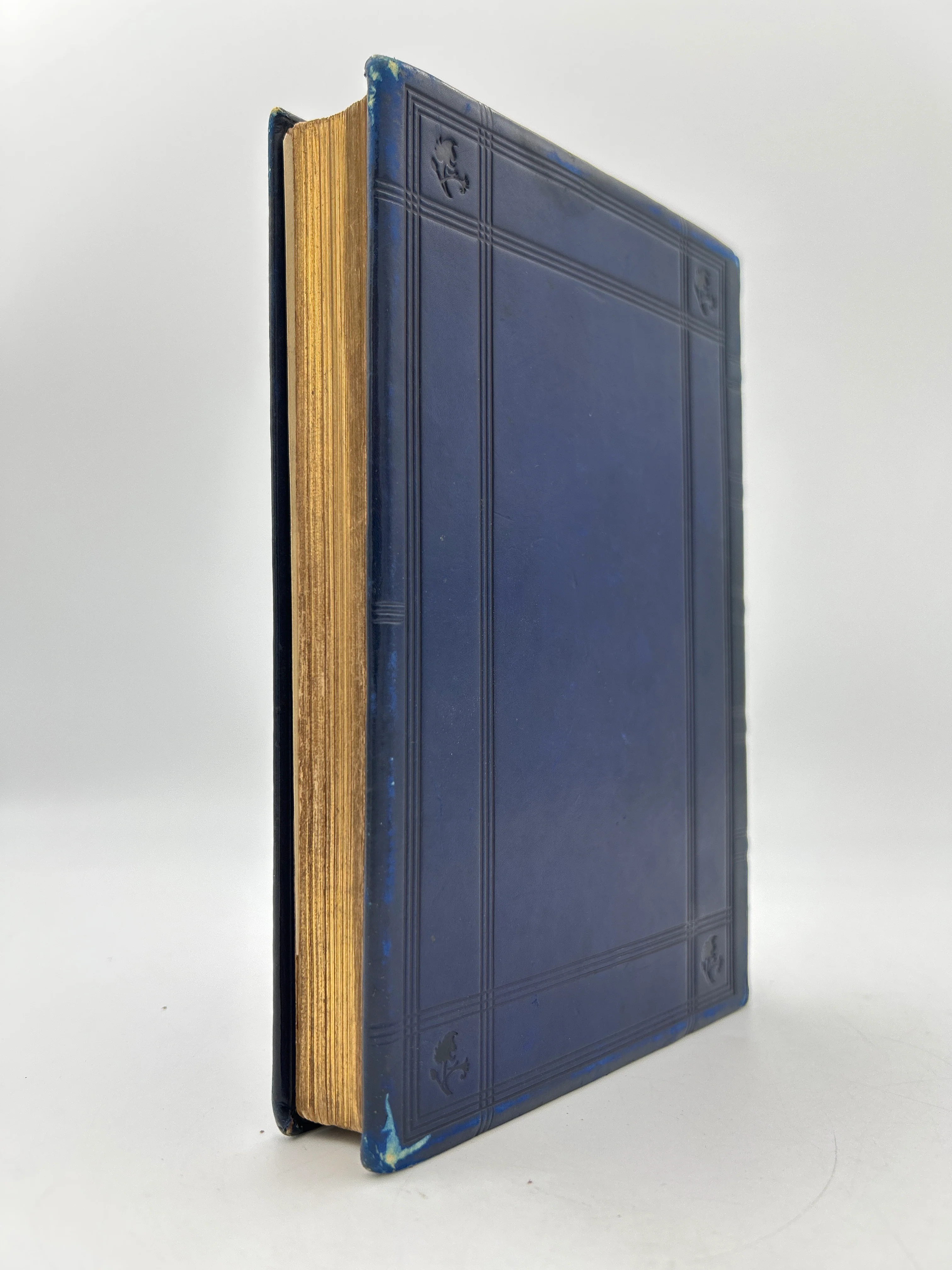
Deep blue calfskin with gilt lettering to spine and five raised bands. Sunfading to spine. Fading to points and general scuffing to boards. Gilt edges. Marbled endpapers. Inscription dated July 6th 1885 on initial flyleaf. Handwritten letter to Edward loosely inserted noting this book as a birthday gift.
$313.25
Original: $895.00
-65%Fors Clavigera with Handwritten Ruskin Letter—
$895.00
$313.25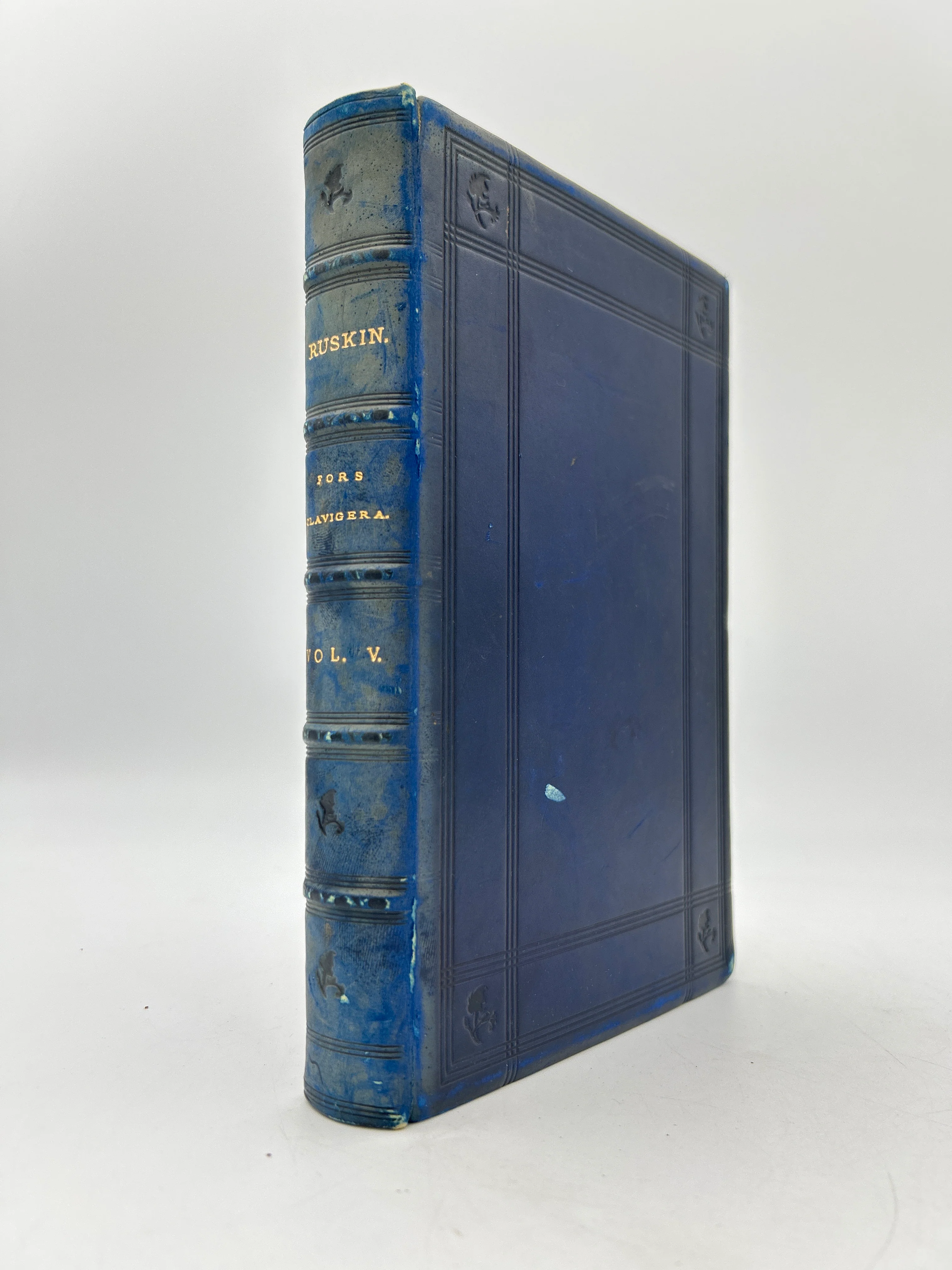
Description
6b John Ruskin. George Allen, Sunnyside, Orpington, Kent, 1875. Volume Five only. Presentation copy to Agnes Stalker from Ruskin. Letter loosely inserted noting this book as a gift to a friend.
Notes
Fors Clavigera is John Ruskin’s sprawling, deeply personal, and highly radical series of monthly open letters addressed to the working-class citizens of Great Britain. Rather than a cohesive political treatise, the work functions as a brilliant, stream-of-consciousness critique of modern industrial capitalism, which Ruskin vehemently believed was destroying the human soul, eroding honest craftsmanship, and poisoning the natural environment. Volume V covers the year 1875 and is highly notable for its deeply pastoral and introspective turn. Within these letters, Ruskin masterfully blends heavy-hitting economic philosophy and critiques of usury with intimate observations on botany, medieval history, and local folklore. It is a foundational text outlining his utopian social experiment, the Guild of St. George, a project aimed at buying agricultural land to allow laborers to escape polluted factory cities and return to a life of rewarding, manual cultivation.
The inclusion of Agnes Stalker as the recipient of this presentation copy elevates this specific book into the upper tier of Ruskiniana. In 1874 and 1875, while living at his beloved lakeside estate, Brantwood, Ruskin formed a close, grandfatherly friendship with Agnes, a local child who lived on the surrounding Coniston moors. Fascinated by her sharp, uncorrupted curiosity about nature, Ruskin engaged in lengthy, playful debates with her regarding the behavior of the local insect population. In a famous sequence within Letters 50 and 51 (contained in this exact volume), Ruskin explicitly introduces "little Agnes" to his nationwide readership, using her intense interest in why bumblebees visited certain flowers over others to attack the rigid, unfeeling nature of modern academic education. The accompanying handwritten letter by Ruskin likely captures this warm, collaborative dynamic, cementing the book as a physical token of a real-life friendship that directly shaped Victorian literature.
Description
Deep blue calfskin with gilt lettering to spine and five raised bands. Sunfading to spine. Fading to points and general scuffing to boards. Gilt edges. Marbled endpapers. Inscription dated July 6th 1885 on initial flyleaf. Handwritten letter to Edward loosely inserted noting this book as a birthday gift.